 +38 0342 504605
  office@arpi.org.ua


Agree – until recently, before the full-scale invasion of the Russian Federation into Ukraine, we were frivolous about our national heritage – traditions, rituals, that is, what distinguishes Ukrainians from other nations. Indulging in the notorious “trends” or being wary of an unsuccessful image in the eyes of situational “friends”, we began to lose the authentic, primordial, ours – that which forms the code of Ukrainianness. How many modern children do not know a single carol? What part of the youth does not even guess what gaivka is? How did the traditions that were called to unite the Ukrainian people die together with our grandparents?
All these questions are rhetorical, and we realize the answer to them even without statistical data. But you know, there is still light at the end of the tunnel. And most importantly – there are people who are ready to rekindle this flame in the midst of the darkness of lost traditions.
The Pechenizhyn community has taken up the task of restoring the cultural values of Ukrainians. According to the head of the NGO “DIE. Good Ideas Unite,” Maria Lutsak, now, during the full-scale invasion of Russia, we are fighting not only for territories, but also for everything Ukrainian, and especially for our cultural heritage. So, without thinking for a long time, she and her team firmly decided that the revival of Ukrainian traditions is still timely today.
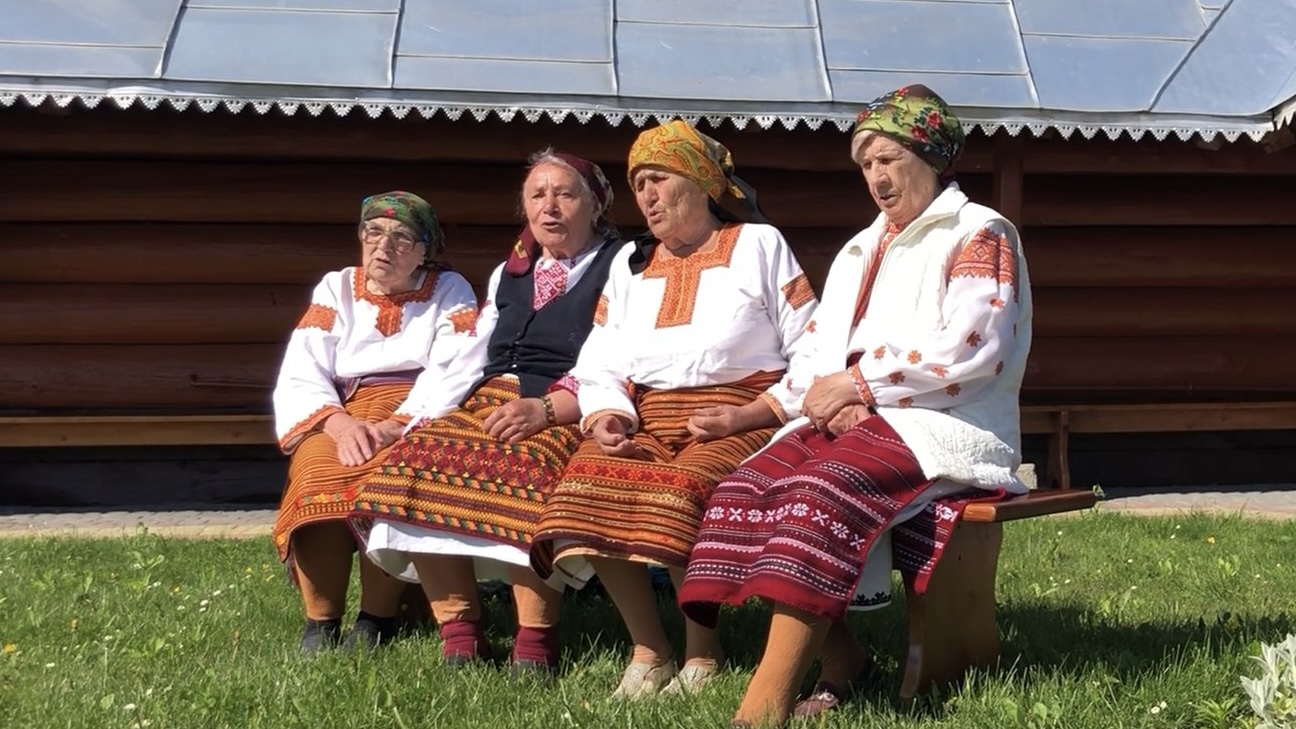
“Hayivka is a type of spring dance that was traditionally performed only during the Easter holidays and two days after. They were mostly sung in the churchyard. The performance was also accompanied by ritual actions and games,” the NGO “DIE. Good Ideas Unite” says on its page. But this is so, if officially. In fact, such a tradition has a much deeper meaning and evokes many pleasant emotions.
“In my childhood, it was an exciting event. It is somehow sacred to me. I remember and feel it in my heart. I remember how my children and I used to drive “Podolyanochka”, play “Lystok do lystochka”, sing “Zaichika”, and the teenagers had some of their own games. But the most exciting thing for me as a little girl was listening to how older women, dressed in embroidered dresses and scarves, performed gaivkas. Unfortunately, there is no such thing now. These songs were special, they had our dialects, and old words that we no longer use, and that kind of folk manner of performance. I was so captivated by their singing that I didn’t even want to play with the children anymore, but sat and listened,” shares Maria Lutsak’s memories.
Only one question arises: “Why is such a wonderful tradition fading away every year?” It feels as if we took the wrong turn somewhere, or set our priorities incorrectly. The head of the public organization believes that the turning point was the “boom” of the latest technologies: computers, phones, tablets. Everyone went online. It was then that children became uninterested in spending time near the church, playing games and performing haivka. And young people were more willing to run to the disco to dance and sing modern songs.
However, Maria Lutsak is sincerely glad that she has such memories, which she recalls with warmth thirty years later. But how many of us can boast of such moments from childhood? Probably not. But everything can still be fixed and, as they say, “open a new breath”. The Pechenizha community is convinced of this.
The head of the NGO “DIYE. Dobry Idei Yednayut” and her team decided to take everything into their own hands, because haivka is not only a cultural heritage that needs to be revived, but also something that can be made, as they say, “mainstream”. “My team and I set ourselves the task of coming up with some kind of flash mob or other activity on social networks that would not require significant financial investments. Our choice fell on the competition. At first, we held it among carol performers. It was not as large-scale as we expected, but still, it brought pleasant results. Therefore, in March we launched our next project – a haivka competition,” says Maria Lutsak.
This is how the residents of the Pechenezhynsk community set about distributing haivka. The head herself enthusiastically talks about the competition, which was later called “Haivkobachnya”. “I am very pleased that we now have a video of “old-timers”, that is, such older women, grandmothers, who gathered and recorded haivka. It is also very valuable that young people and children joined the competition. In this way, the little ones learned about this culture, and, perhaps, in the future, they will remember and tell their descendants about such traditions.”
The jury of the competition was the presenter and journalist Kostyantyn Hrubych, Iryna Yantso - a member of the ANTSYA group, who became semi-finalists of the Eurovision Song Contest 2022, and the cymbalist, founder of the ZAPAL group, and participant of the TV project "Ukraine has talent" Andriy Stovpyuk.
With their competition, the organizers not only forced the residents of the community to remember old rituals and songs, but also drew the attention of Internet viewers to the need to revive ancient customs. The importance of the project also lies in the fact that the recorded gaivka will definitely not be forgotten, and the older generation has passed on to us such an important tradition.
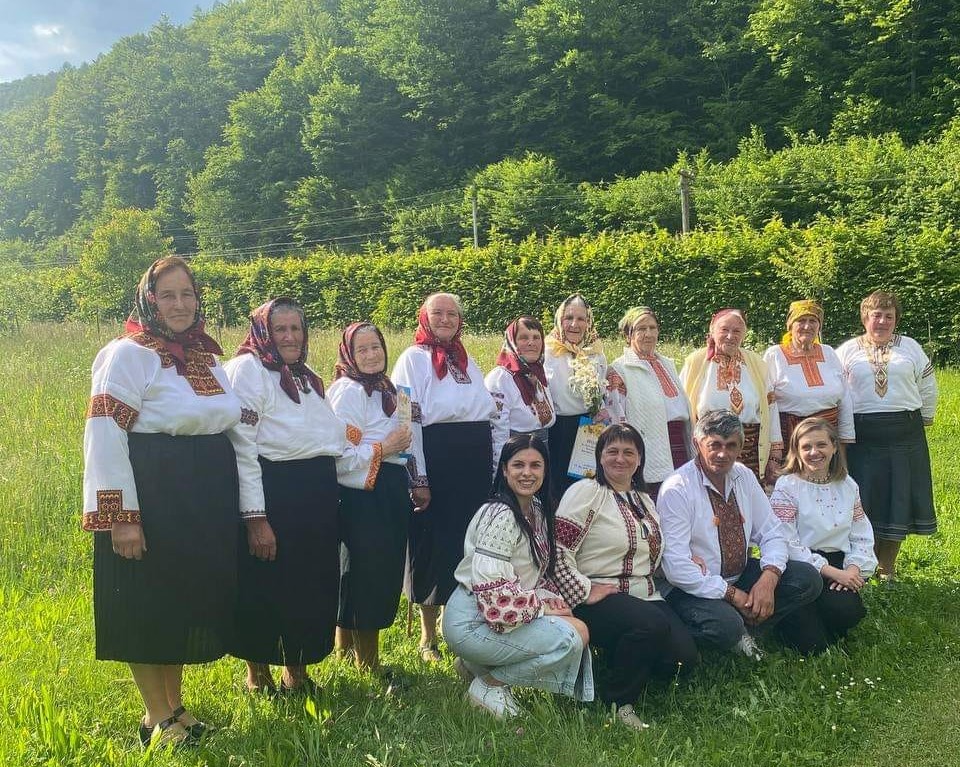
Also, the public organization “DIE. Good Ideas Unite” is convinced that such rituals and songs are our specialty, which can definitely become something that unites Ukrainians around a common goal. “Cultural heritage is the foundation on which you can build a business in small mountain communities. This is what can ensure sustainability and development. I live in the Pechenizhyn community, my children study here, my friends are here, that is why it is important to me that Pechenizhyn is not a depressive village, but a cultural and tourist center for people with modern views and deep values.”, says Maria Lutsak.
Hayivka is not something old-fashioned and uninteresting, it is something sacred and spiritual that should be brought back into the lives of Ukrainians, as Maria Lutsak and her team are doing. They have also been tirelessly helping our military for a very long time. But this time, on Easter holidays, volunteers wove nets while performing hayivka. And as they say: "they combined the useful with the pleasant."
There are still many plans for the revival and spread of haivyok in the Pechenizha community. The team of the NGO "DIYE. Good Ideas Unite" wants to try to find a specialist who could research the archives and find the forgotten lyrics of the vesnyanoks that were sung in their community. They also want to continue "Hayivkobachenya" and, if conditions in the state are favorable, hold a haivyok festival. They also planned to publish a collection of lyrics of such songs, but, unfortunately, the project application was not supported. However, the team was not upset, but on the contrary, took it as an impetus to work even harder.
"We have the desire and ambitions and I believe that resources will also be found," notes the head of the public organization.
The article was prepared within the framework of the project of the Agency for Private Initiative Development "Promoting Youth Civic Participation in Decentralized Communities" with co-financing from the National Endowment for Democracy (NED).

 26 Dnistrovska St., office 12