 +38 0342 504605
  office@arpi.org.ua


Chests are traditional furniture that have long been common in the interiors of Ukrainian houses and over time began to disappear due to changing fashion, but now they are back in trend. The Dnipro village of Igrin was once famous as a place where chests were made, painted with a special decorative painting, which became a kind of artistic calling card of the region. The preservation and popularization of this painting, which is usually called Mykolaivsky (after the name of another village located nearby - Mykolaivka), became the topic of a youth initiative of the NGO "Youth Communication Center "Positive Pavlograd". According to the director of the Pavlograd Historical and Local Lore Museum Anastasia Shanya, who joined this activity, the decorative painting of household items recreates a unique vision of the world that Ukrainians have been broadcasting for centuries.
Chests with Nikolaev painting from the late 19th and early 20th centuries have been preserved in villages of the Dnipropetrovsk region, in particular in the Novomoskovsk and Pavlohrad districts. In the past, these chests had the general name "Katerynoslavsky", later "chests from the Dnipropetrovsk region".
“There is a debate among scientists and local historians about the name and geography of the origin of this decorative painting. Some historians claim that it originated in the village of Mykolaivka, Novomoskovsk district, and the first mentions of the painting characteristic of this area appeared about three hundred years ago. Other researchers believe that it originated in the village of Igren (now part of the city of Dnipro),” says Anastasia.
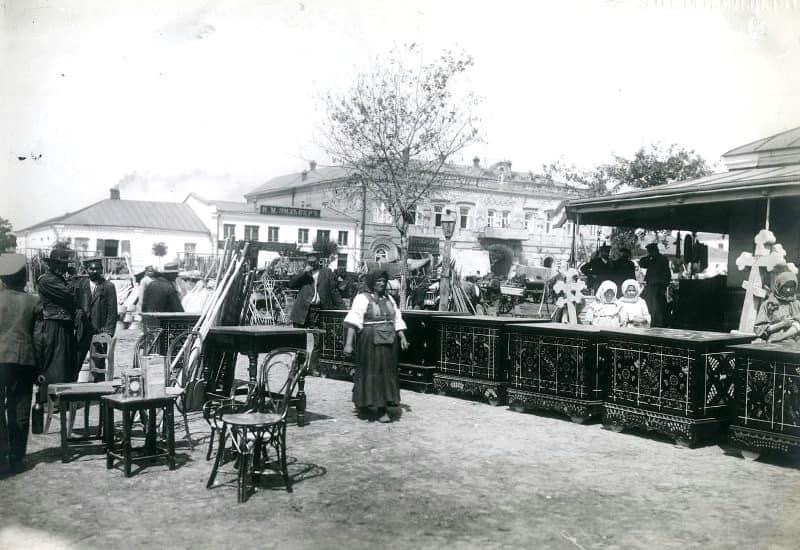
In favor of this hypothesis, local historian Igor Lysenko writes the following: “In the village of Igren at that time, a large forest pier was built. So that you can imagine, the shortage of wood in our region was such that people traveled 200-250 versts to Novomoskovsk and Igren for boards. It is quite logical that after the opening of the forest pier, carpenters, carpenters and coopers from all over the district flocked to Igren. The development of the production of wooden objects was crazy. In 1888, the report of the Novomoskovsk zemstvo board first mentioned the craft of making chests, which fed many families.
The proximity to large markets in Novomoskovsk, Ekaterinoslav and Pavlograd put the production of chests in Igren on an industrial track. In a fairly short time, these chests, especially the painted “floral” ones, became a real calling card of the Ekaterinoslav region. It is even known that the historical and ethnographic museums of Ekaterinoslav, Kyiv and St. Petersburg ordered chests from the Igren masters for their expositions.
It is quite likely that the Igren school of masters of artistic painting began to spread to other villages of our region. Of course, not on such a scale, but in some villages local masters began to make painted chests in the style of the Igren painting on order.
But the painting of the masters from Igren was still original, so it was they who represented the region at ethnographic exhibitions and received awards for it.
“It is worth noting that in the Soviet period this painting was attributed to the school of Petrykivka painting, whose masters also painted chests from the end of the 19th century. But there has been almost no thorough research into the origin of the painting on the Katerynoslav chests, although there is enough historical material. An interesting point is that if you start searching Google for “Igren painting” - you will not find anything, but if you write “Mykolaiv”, the search will give you more than a dozen publications”, - adds the museum director.
But despite the debate among local historians and researchers, the uniqueness of the Mykolaiv painting is undeniable: a dark green background, seven primary colors, images of flowers counterclockwise. This technique was used to paint mainly wooden products - chests, but also - basins, benches, cradles, plates. As researcher Yur Marina notes, the stylistic features and symbolism of the Mykolaiv/Igren painting on chests - a “vase” (tree of life), a branch, a flower, a wreath - are traditional motifs and elements. "Vase" is a sprawling luxurious tree, each branch of which is crowned with a lush flower with leaves, buds, "growing" as if from a vessel. It was placed mainly in the center of the compositional field, other motifs served as a complement, which in turn affects the overall composition of the painting. The most variant element of the ornament in the paintings are flowers. The variety of their flower configuration is based on two types: close to natural forms - mallows, roses, peonies, tulips, daisies, lilies, and abstracted - "apples", "onions", "cucumbers" (similar to motifs of oriental fabrics), etc. Flowers were painted in front view (top view) and profile (in section).
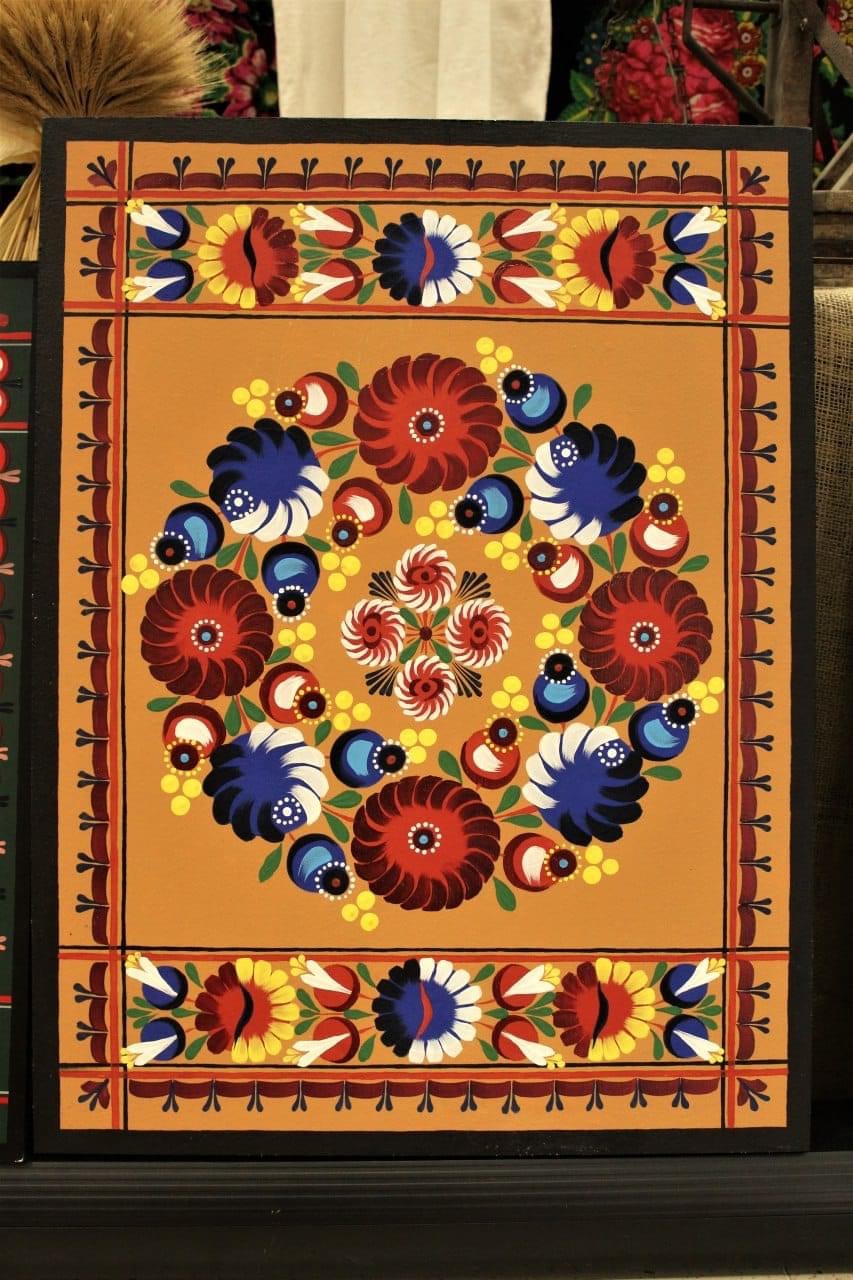
Another important component of the ornamentation of the chests were bunches of grapes, which were used in the decoration of the profiled platband, where it was the central motif, and in the decoration of the forehead, abutments and lid - complementary in the composition. The color scheme of the paintings in the first third of the twentieth century. has a less diverse palette, the main ones are green, red, blue, black, white, which are complemented in details by yellow, pink, light green, burgundy, orange. Based on regional traditions, local preferences and adherence to a clear sequence of technical techniques in the execution of the elements of the ornament, a harmonious combination of cold and warm shades of color, contrasting ratios of saturated colors, in particular, red and green, was created.
In 2021, the Mykolaiv painting was included in the top ten elements of the cultural project "Intangible Cultural Heritage of the Dnipropetrovsk Region". And by the decision of the Novomoskovsk City Council, the Mykolaiv painting was recognized as an element of the community's intangible cultural heritage. The reproduction and popularization of the Mykolaiv painting will also be the goal of master classes initiated by the NGO "Youth Communication Center "Positive Pavlograd" together with the Pavlograd History and Local Lore Museum:
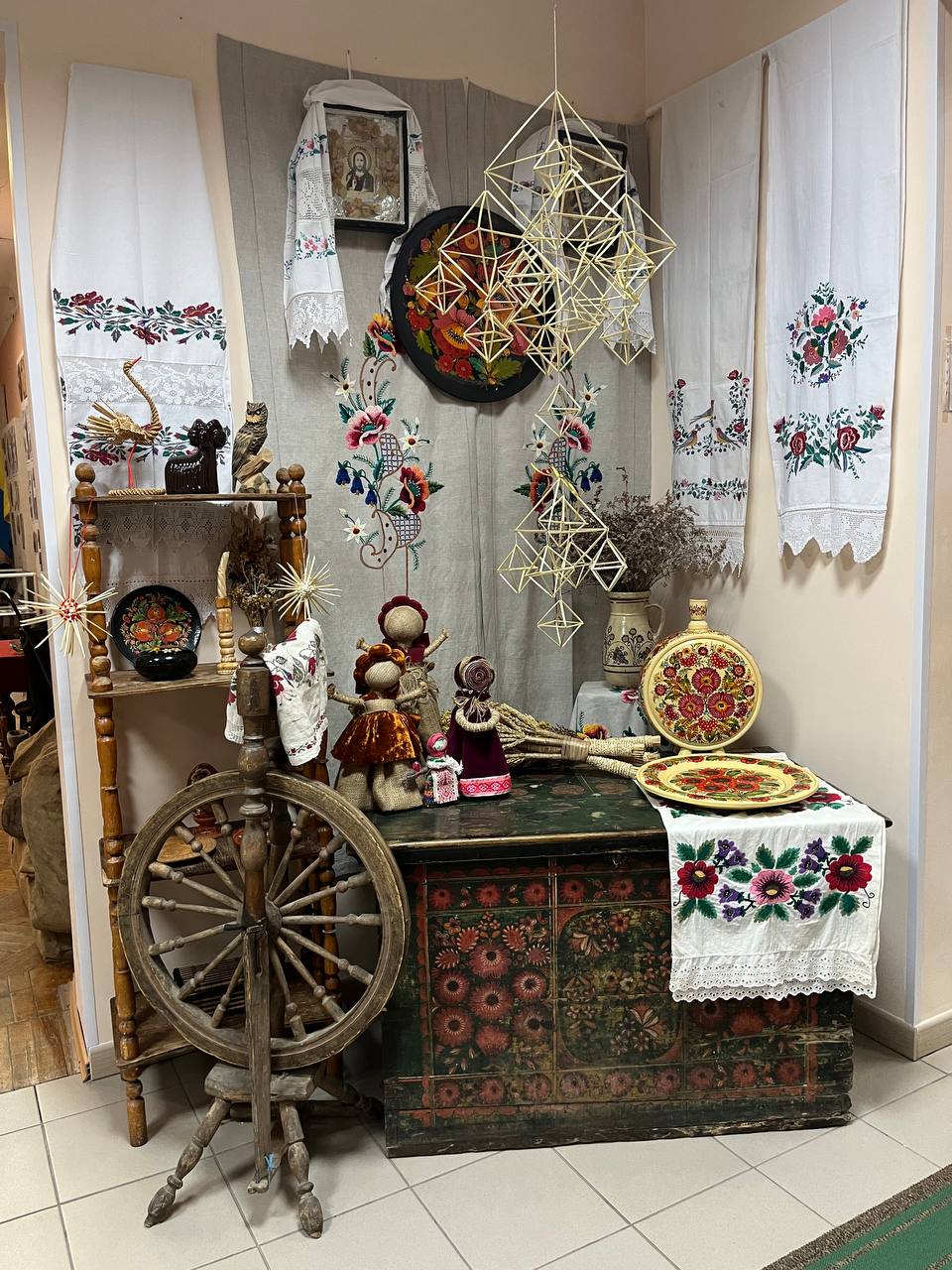
“The Pavlohrad Museum has preserved chests with Mykolaiv painting of the late 19th - early 20th centuries. Therefore, we set ourselves the goal of popularizing this painting, focusing on samples preserved by museums and local residents, promoting the systematic involvement of community residents in the preservation of the cultural heritage of our region and strengthening the influence of cultural heritage on the level of community self-identification.
We plan to hold family events for residents and guests of the city: master classes in painting on paper, eco-bags, glass - will be conducted by teachers of the “Pavlohrad School of Arts”, interactive quests in the museum, mobile photo exhibitions, where wedding chests will be depicted, focusing on the uniqueness of the ornamental compositions of the chests and the symbolism of the painting. The exhibitions will be accompanied by excursions and a photo zone. Since the most common and effective channel for disseminating information for today's youth is the Internet and social networks, we will continue to release videos on social networks about murals, popularizing it."
The article was prepared within the framework of the project of the Agency for Private Initiative Development "Promoting Youth Civic Participation in Decentralized Communities" with co-financing from the National Endowment for Democracy (NED).

 26 Dnistrovska St., office 12