 +38 0342 504605
  office@arpi.org.ua


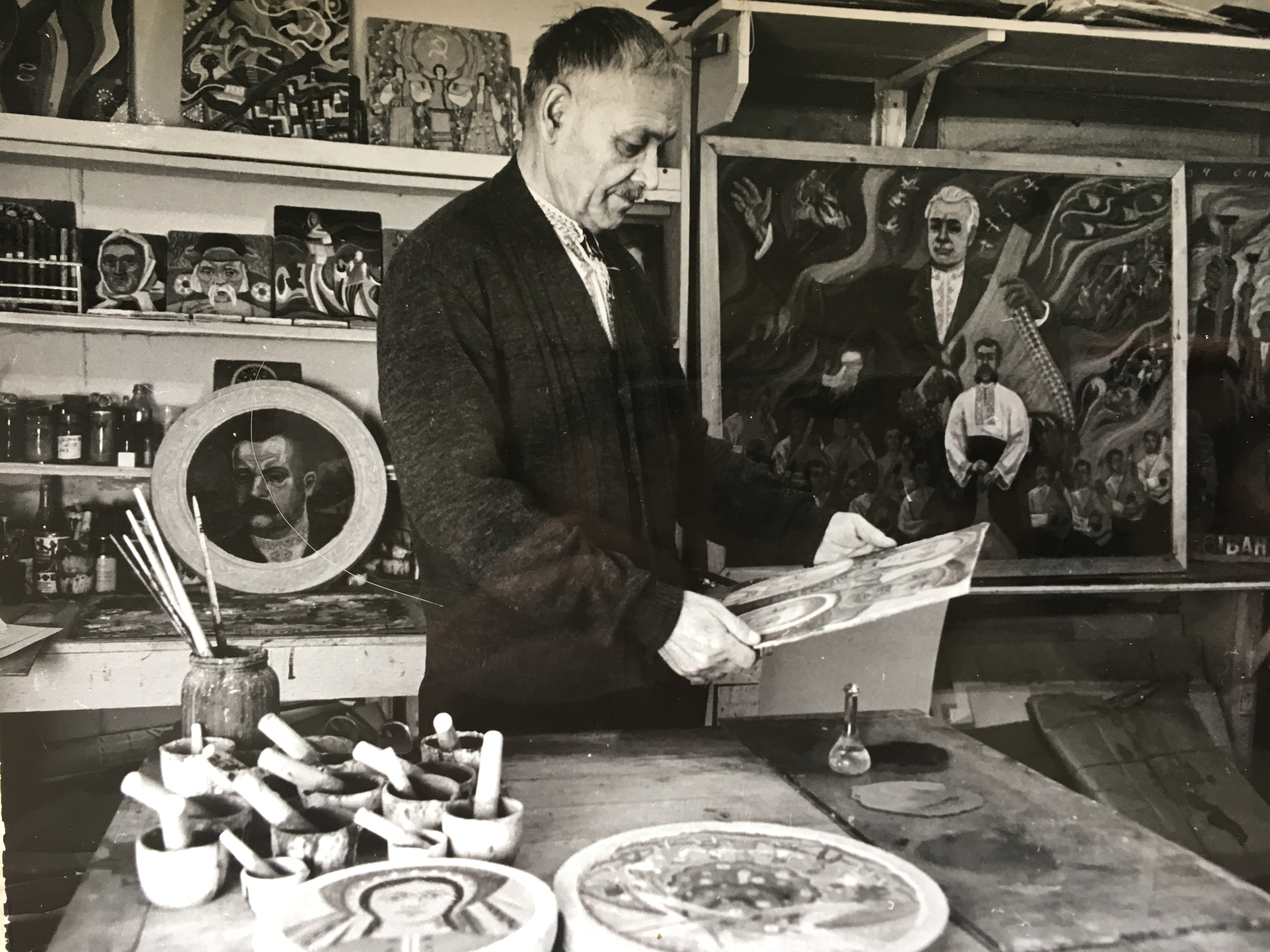
What do we know about Nova Kakhovka, except that there was a hydroelectric power station there, which was blown up by the occupying Russian troops in the summer? Does the average Ukrainian know that the city was built in the 1950s by the brightest Ukrainian architects, engineers and artists, who, with the assistance of Oleksandr Dovzhenko, created a unique garden city, the concept of which was sustained only in a few cities in the world? Most of these builders belonged to the flower of the Ukrainian national revival of the 1920s, thanks to which the architectural ensemble of Nova Kakhovka was sustained in the Ukrainian spirit. Among the artists working at that time was the artist-boychukist Hryhoriy Dovzhenko, who decorated almost 200 buildings in Nova Kakhovka with monumental panels - “stone embroidery”, which became a kind of attempt to record the history of Ukrainian ornament on the facades of buildings in the young Ukrainian city.
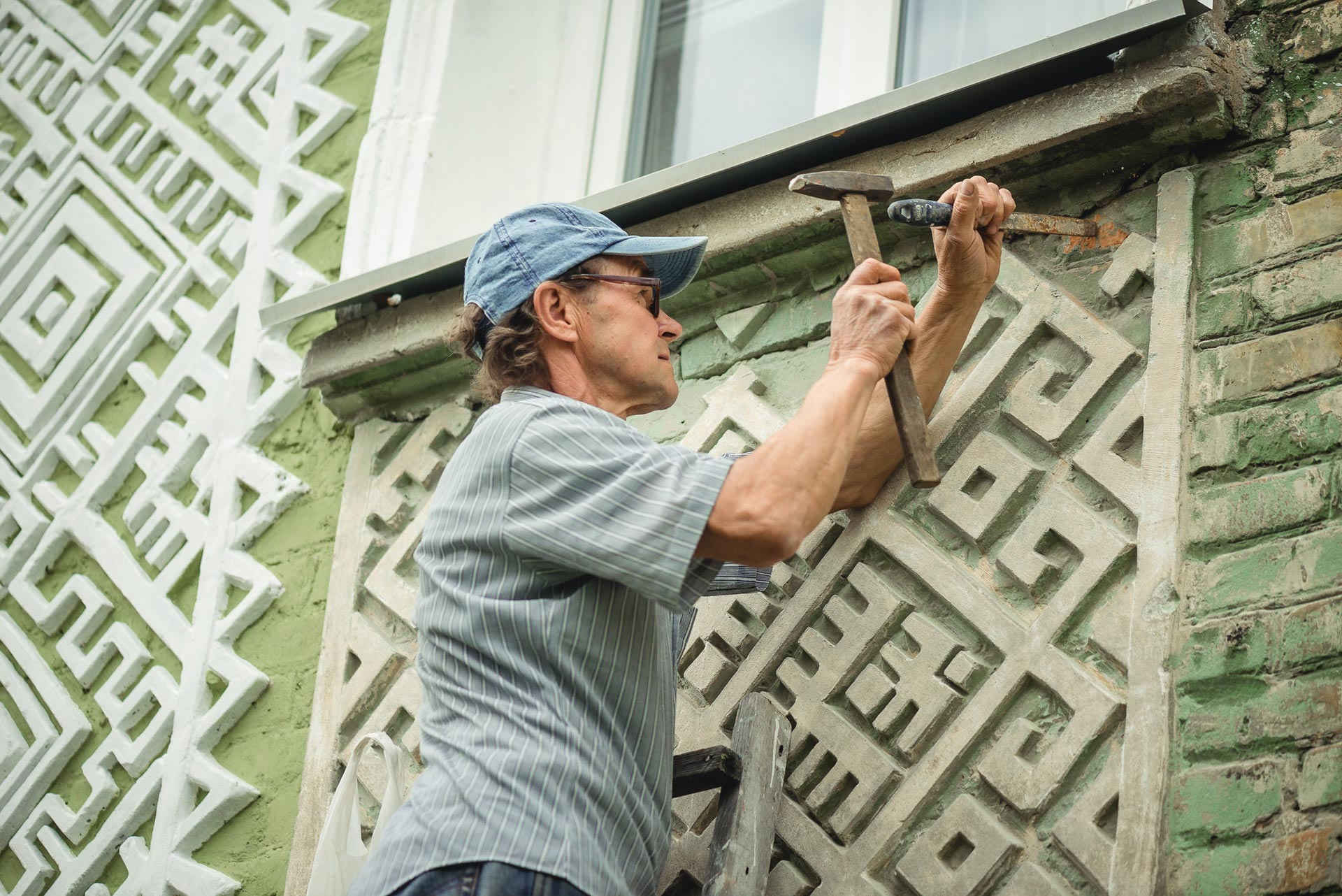
In the following years, under the influence of Soviet power, the panels were whitewashed in many layers, and the residents of Novaya Kakhovka forgot about their existence. In the 2010s, a threat appeared over the unique buildings of the city - all 180 residential buildings with ornamental panels were designated for demolition for the construction of high-rise buildings. To preserve, study and popularize the unique ornaments, architects Tatyana and Elizaveta Yevseyeva founded the NGO Novokakhovskoe Society for the Protection of Cultural Heritage (hereinafter referred to as NK TOKS), which actively engaged in the restoration of the panels. Stone embroidered shirts became a unique cultural heritage in Ukraine, and after a full-scale armed attack they found themselves under Russian occupation.
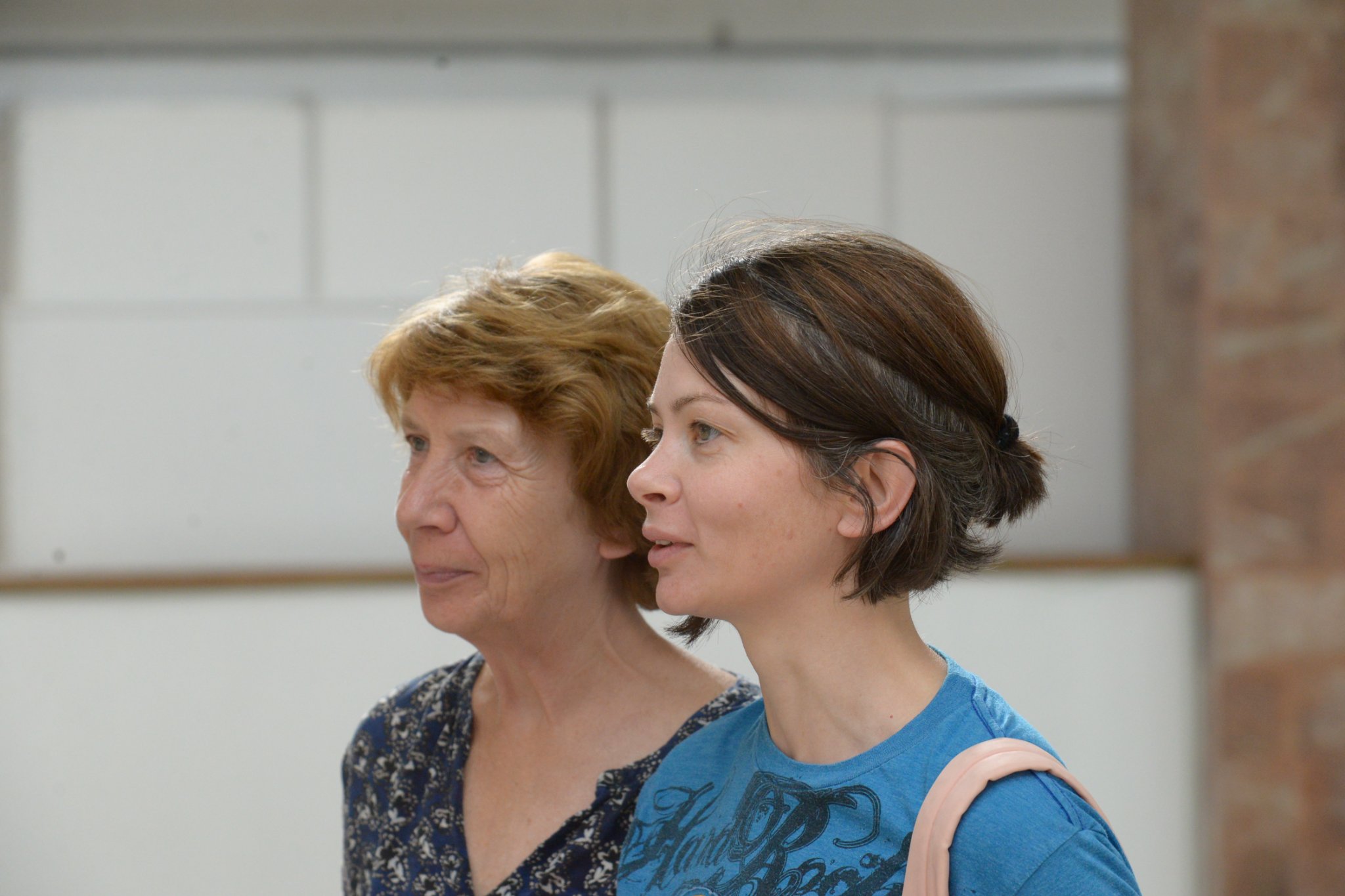
We talked about the history of Stone Embroidery, the work on their preservation, the current state of the ornaments during the occupation, and the popularization of cultural heritage in Ukraine and beyond with Elizaveta Yevseyeva, who moved to Lviv with her mother Tetyana after the occupation of Novaya Kakhovka by Russian troops on February 24, 2022.
“The residents of Nova Kakhovka themselves called the monumental panels of Hryhoriy Dovzhenko “Stone Embroidery”. This name became a brand.
We (NC TOKS) created the project “Stone Embroidery of Nova Kakhovka” within the framework of which a large number of lectures and excursions were held about the value and uniqueness of the Nova Kakhovka panels. Active educational activities in schools and lyceums made this page of the city’s history known to every schoolchild and student who choose the topic of “Stone Embroidery” of Nova Kakhovka for their educational research.
Later, in order to preserve the objects, a large number of volunteers gathered, who undertook to restore the panels, and local residents became interested in their homes and joined in the restoration. Thus, we managed to restore the ornamental panels on 9 buildings of the city with our own labor and funds. And since 2017, thanks to the efforts of activists of the NK TOKS, the historical center of Novaya Kakhovka has become a holistic monument of architecture, urban planning, and monumental art.
In addition, initiatives began to emerge to brand cities with elements of Dovzhenko's ornaments, and the artist's hometown of Bashtanka in the Mykolaiv region chose the Novokakhovka ornament for the brand of its AH.
In Novaya Kakhovka itself, the value of the heritage was recognized at the administration level and a tourist program was formed. There were already agreements to open a tourist information center in one of the objects of the ensemble of the historical center of the city and the tourist route "stone embroidery" of Novaya Kakhovka was approved at the local, regional, and national levels... But all these plans were interrupted by the war and occupation,” recalls Elizaveta.
The architects continued their work on popularizing the historical heritage of Novaya Kakhovka in Ukraine and around the world with the support of the Lviv “Heritage Bureau” and the Lviv Department of Historical Environment Protection. The traveling banner exhibition “Occupied Heritage of Southern Ukraine: Stone Embroidery of Novaya Kakhovka” was presented in Lviv in May 2022. Lectures and workshops on the technique of carving on raw plaster using the method of Hryhoriy Dovzhenko, which accompany the exhibition, help to popularize stone embroidery among a wide audience. The workshops are conducted by Olga Mamchur, a restorer of stone works of art and a teacher at the Lviv College named after I. Trush.
“The goal of our project is to tell the true history of the occupied city, draw attention to the cultural heritage of this region, emphasize the connection of Ukrainian modern art with multinational roots and European trends in architecture and monumental art.
Participants call the workshop art therapy, because the story of the post-war revival of Ukrainian art by Hryhoriy Dovzhenko is very relevant in our time, his lyrical ornaments calm and comfort, and classical techniques captivate and immerse in the world of the eternal. We adapted the technique of carving on raw plaster for different audiences, so there are practically no age restrictions. For children, this is new and interesting information about the history of Ukraine, as well as an opportunity to practice new crafts. For students and professionals, this is a great opportunity to expand their knowledge and ideas. In addition, the involvement of restoration and art students in the workshops, the interest in the project of architects and heritage protection specialists give us hope for assistance in the post-war reconstruction of the city.
For Ukrainians who find themselves in foreign cities, our project is a kind of therapy and an opportunity to rally around their own heritage, to support each other in the hope of victory, return home and revival. Even our military created the Nova Kakhovka chevron with an element of stone embroidery, which they perceive as a talisman,” says Elizaveta Yevseyeva.
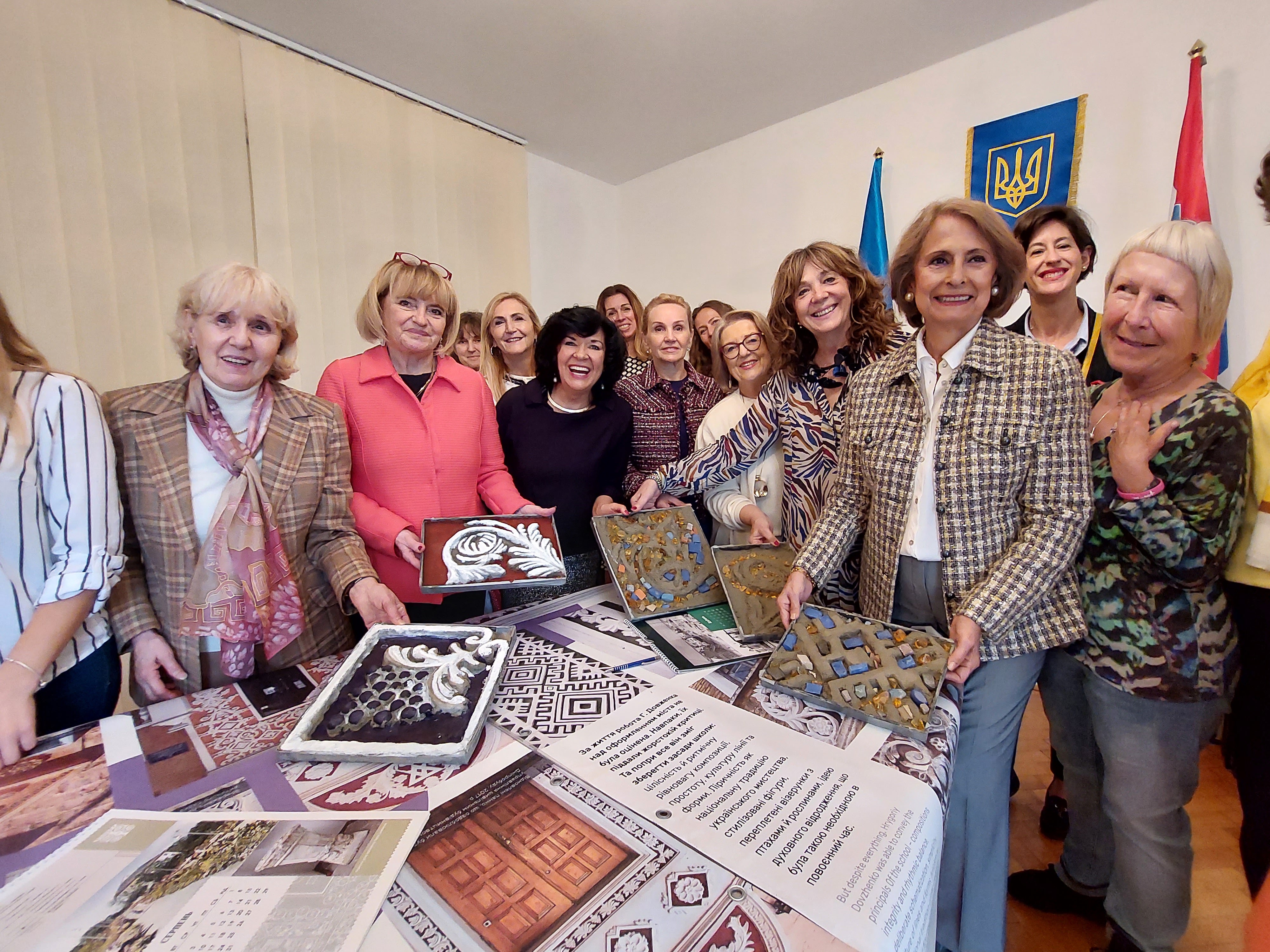
The exhibition project is invited to joint and personal exhibitions. Thus, with the help of volunteers and public organizations, the exhibition-workshop “Occupied Heritage of Southern Ukraine: Stone Embroidery of Nova Kakhovka” was presented in Lviv, Ivano-Frankivsk, Chernivtsi and Drohobych. At the invitation of the Ambassador of Ukraine to Croatia, the exhibition was presented during the first parliamentary summit “Crimean Platform” in Zagreb. At the invitation of the Office of the Chief Conservator, the project was presented in Warsaw. With the support of the J. Geppert Academy of Arts, the exhibition was held in Wroclaw. The project was also accepted by Nova Kakhovka’s sister city in Poland - Olesznica. The project was supported by the curators of the Ukrainian pavilion at the Venice Architecture Biennale - the story of stone embroidery and the city's heritage under occupation was presented in the opening program "Ukrainian DNA", as an illustration of the ability of Ukrainian art and architecture to be reborn over the centuries in conditions of total destruction, terror and wars.
A series of workshops with temporarily displaced persons in the Lviv region is currently coming to an end. The organizers of the project plan to continue it in various forms, with mandatory components of the exhibition and workshop in Ukraine and abroad.
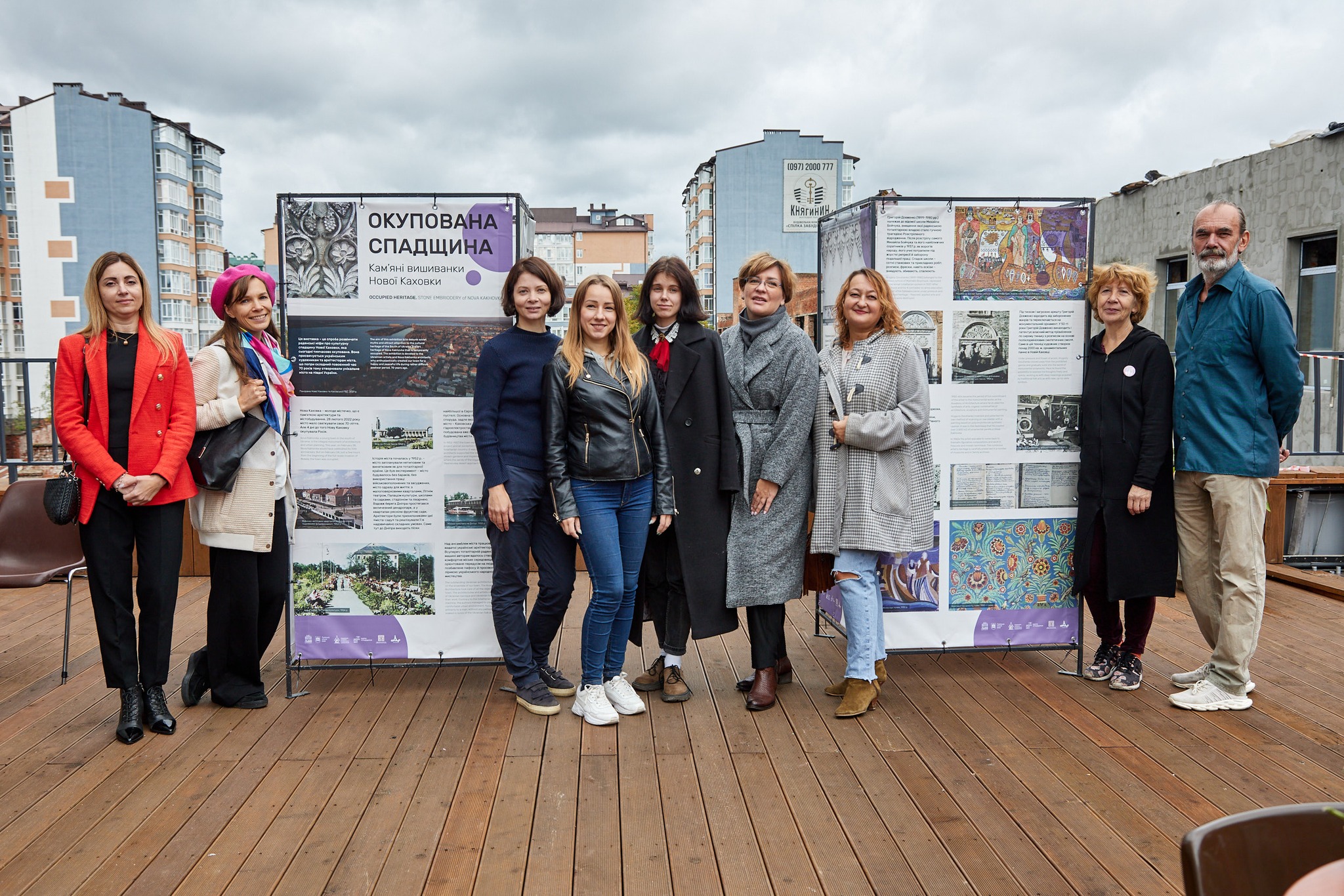
“We want to work more systematically abroad, presenting our cultural heritage, because this year there was a feeling that foreigners were already tired of Ukrainians. In addition, a book about the Stone Embroidery of Novaya Kakhovka is due, the preparation of which was planned back in 2022, but due to the full-scale invasion we were forced to postpone these plans,” says Elizaveta.
Since Tetyana and Elizaveta Yevseyeva worked not only in Novaya Kakhovka until February 2022, but also researched cultural heritage in other settlements of southern Ukraine, today the architects are actively involved in projects related to their often rapid reconstruction, emphasizing the importance of preserving the authenticity of local architecture. With the help of local residents, they also actively monitor what is happening in Novaya Kakhovka during the occupation:
“We know that some of the houses were damaged, and accordingly, the ornamental panels too. Approximately 10 houses with stone embroidery have been lost or require significant restoration work. We also predict that if the front line shifts further south, there will be much more such destruction. As for the Summer Theater or the Palace of Culture in Novaya Kakhovka, we do not know their condition and the degree of destruction, since only Russian military personnel are currently stationed in the part of the city where they are located.”
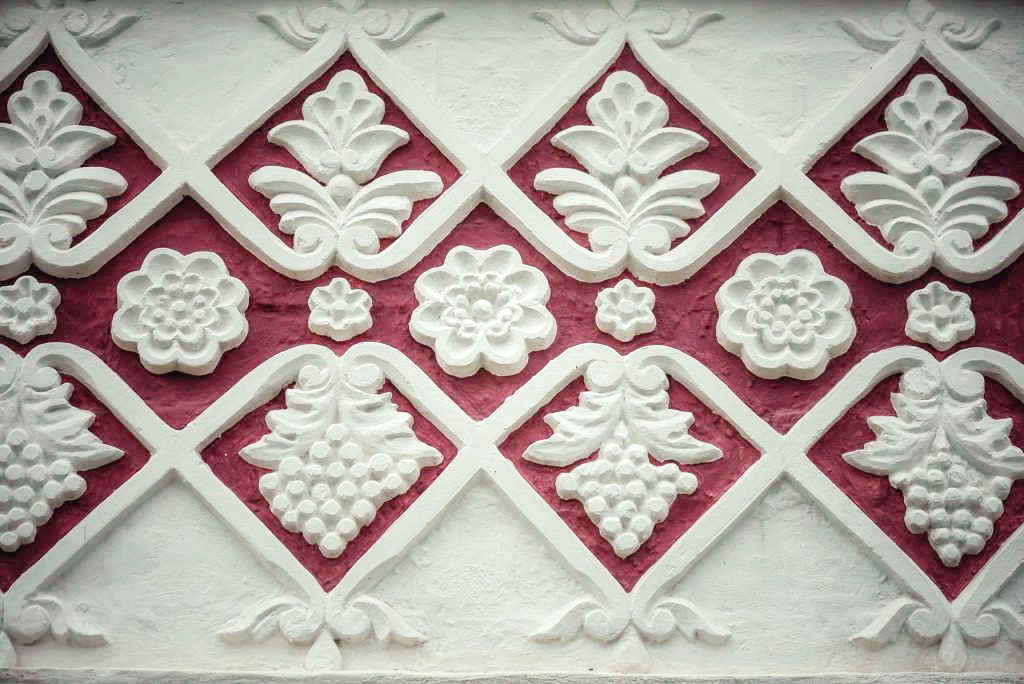
Despite all the destruction caused by the Russian attack, the architects hope to return to their native region, where they will actively restore the architectural heritage and continue to study and popularize it throughout Ukraine and the world.
The article was prepared within the framework of the project of the Agency for Private Initiative Development "Promoting Youth Civic Participation in Decentralized Communities" with co-financing from the National Endowment for Democracy (NED).

 26 Dnistrovska St., office 12