 +38 0342 504605
  office@arpi.org.ua


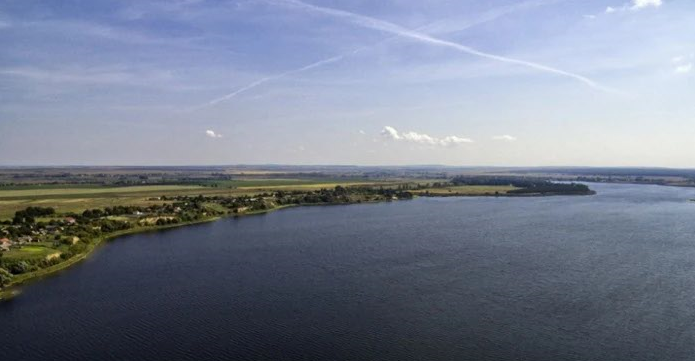
The village of Khrinnyky. Is it known to many, not in the world, but at least in our native Ukraine? We will not conduct a survey, because its result can be easily predicted. However, after our discovery of this settlement, its name will never be forgotten by us. Khrinnyky is a place where several protohistoric cultures, ancient and ancient Russian cultures, were layered at different depths of the historical ocean.
Here, archaeologists have been conducting research since the end of the 19th century. and have found at least seven so-called cultural layers. It is said wisely for those who have no idea how the field of archaeology works. But in general, everything looks surprisingly tempting, until it takes your breath away when you begin to imagine what the people who inhabited Khrinnyky from the 4th-3rd millennium BC experienced during history. until at least the Middle Ages.
The village of Khrinnyky is located in the Demydiv territorial community in the Rivne region. It is in Khrinnyky on the root terrace of the left bank of the Styr River, approximately 1.75 km northeast of the Khrinnytska HPP, that the historical and cultural monument Shankiv Yar tract is located. The tract was opened in 1976. Podolsk Paleolithic detachment of the Carpatho-Volyn Expedition of the Institute of Social Sciences of the Academy of Sciences of the Ukrainian SSR, archaeologists Volodymyr Savych and Andriy Bogutsky.
Research on the multi-layered settlement in the Shankiv Yar tract has been ongoing since 2010 to the present. In 2019, the public organization "Promoting Village Development" managed to collect and publish important facts in the course of the project "Historical Excursions in the Shankiv Yar Tract" to arouse, in addition to undeniable scientific interest, interest among local residents and potential visitors to the village.
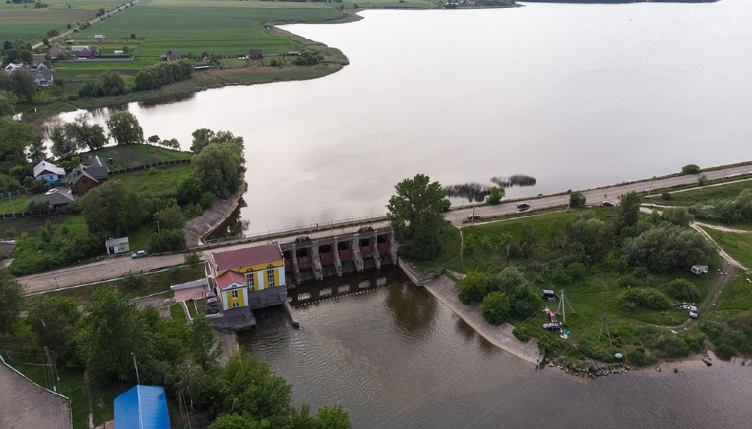
Local activists organized a traveling exhibition and held educational events, presenting Khrinnyky in a completely new light. They organized the collected material on the thematic web resource http://shankivyar.org.ua/. Only through the three main articles on this site - "Slavic Period", "Goth Settlement", "Copper Age and Early Iron Age" - we receive valuable data on local history, which can be linked to the course of world history in the corresponding period, or to fully objectively imagine the historical waves independent of each other that covered this area and similarly - other areas of European civilization. Well, here is the chronology that begs to be presented to you:
|
IV - III millennium BC. |
on the site of Shankovoy Yar back in the so-called Copper Age (the Eneolithic era) and the Early Iron Age. How do the artifacts of Shankovoy Yar testify to this? This period is marked by special pots - light brown , later - brown amphorae. Then - pots, bowls, vases are already decorated with through holes on the edge of the rim. We are familiar with this era in connection with the famous Trypillya culture. |
|
Approximately 8th century BC. |
Scientists associate with Khrinnyky the life of the so-called assimilated Scythians, who inhabited the area from Volhynia to the Carpathians. And in the 5th century BC. here one could meet the proto-Slavs - the Neurs . These free people, whose settlements were run by white tarpans, are mentioned by Herodotus at this very time. |
|
5th-7th centuries. |
During the period of the Prague-Korchak culture, which has no connection with Prague, but is called so thanks to the ceramics and the Czech researcher of Ukrainian origin, who first identified this culture, the Sklavins lived here. He made his conclusions about this, again, by examining the fragments of dishes. The Sklavins had molded ceramics of a special Prague type. This was a cultural (one cannot say ethnic or national or even racial) group that inhabited Hrinnyky and, in addition, the surrounding area from the Balkans to the Vistula. |
|
III -V centuries. |
Ancient Gothic period. It seems that there was a Gothic capital in Hrinnyky . And scientists suggest (wow!) that Hrinnyky was the core of a Gothic settlement, represented by the so-called Velbar culture. Their finds abound here . And these are dwellings and outbuildings. The dwellings resemble boats, perhaps the very ones in which the Goths arrived on the mainland at the beginning of the 1st century AD. There was also a mill here with rotary millstones with a bedstone with a diameter of 41 cm. Such a mill served the entire community. Then it took 2.5 - 3 hours to grind 8 - 10 kg of grain. And the most striking among the finds of Shakovy Yar of this period is the bronze head of the deity Serapis - the Hellenic God, in whose image the gods Osiris and Apis were combined . Serapis was the lord of the elements and natural phenomena. The god's head was crowned with a basket of fruit, symbolizing abundance. Trade with the Romans was the norm for local Volyn people, so they decorated their homes with Roman gods. |
|
5th – 6th centuries. |
We are swimming somewhere to the middle depth of the historical ocean. This is the Chernyakhiv culture. Samples of the dwellings of people of this time were also found in Khrinnyky . Their peculiarity was sand-concrete dwellings, the absence (Attention!) of division into poor and rich. In Chernyakhiv dwellings they only spent the night, because the rest of the day people had something to do – they made something for themselves in the fresh air and cooked food on an open fire. In their half-dugouts sand-concrete njlsiys k . lb They plunged into the night and into the winter. |
|
7th-9th centuries. |
There was the Luka- Raikovetsky period , when a single Slavic space was formed on the territory of Right-Bank Ukraine, Transcarpathia, the adjacent region of Belarus, Moldova, Romania and Bulgaria. In the 9th century – Khrinnyky was settled by the Dulibs, who became part of Rus. |
|
10th-15th centuries. |
Middle Ages. There are many finds about a local feudal lord, who was probably called Shanko . Here are already high-quality pots, not molded, but cast on a potter's wheel, with stripes, nets, beads. You can see how people locked their homes with hooks-locks, because they obviously had something to store. The only Volyn sword of the 14th century. found also here – in H rinnyky ! Surely, noble duels in the style of Cervantes were not alien to the locals. The image of a fragile young lady is touching and evokes in the imagination a silver openwork bead and a ring made of thin silver wire. |
In addition, thanks to the painstaking hard work of researchers, it was possible to find unique photographs in European archives that depict scenes of life and everyday life of long-gone times, historical monuments of the region.
Even the brutal war in Ukraine, which began in February 2022, initiatives to preserve cultural heritage in the village of Khrinnyki continue. In the summer of 2023, the public organization "Center for Development and Change", headed by Oleg Husarevych, won the prize of the head of the Rivne Regional State Administration and the head of the Rivne Regional Council in the amount of 50 thousand UAH. for the restoration of a spring in the village of Khrinnyki in the Reizya tract and the creation of a recreation area in ethnic style there.
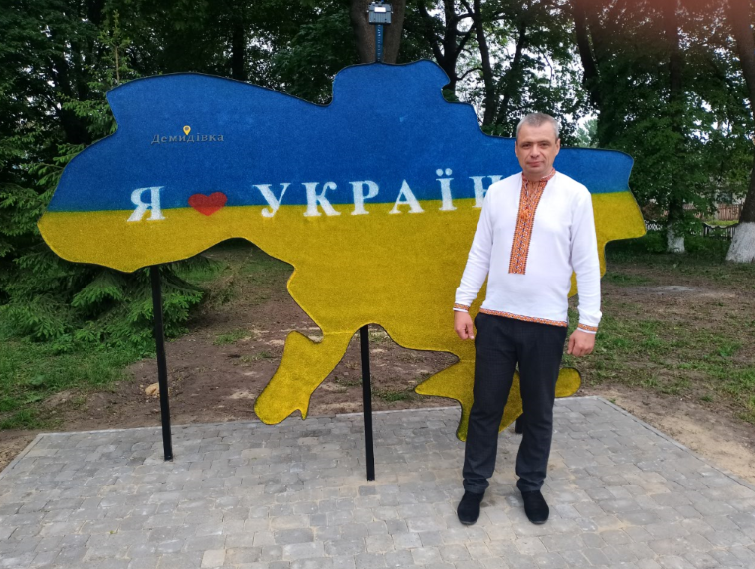
We sincerely hope that Khrinnyky will become as close to you, interesting, and mega-desirable to visit as it has become to us. It remains only to wish Demydivka and Khrinnyky victory of Ukraine and post-war development. And it will definitely come when we have something to win for – these are thousands of years of unique history, an ocean in which you can tirelessly swim, dive, and immerse yourself in its waves again and again. So Khrinnyky will no longer be Terra incognita, at least for our audience!
The article was prepared within the framework of the project of the Agency for Private Initiative Development "Promoting Youth Civic Participation in Decentralized Communities" with co-financing from the National Endowment for Democracy (NED).

 26 Dnistrovska St., office 12