 +38 0342 504605
  office@arpi.org.ua


Iryna Rachkovska-Bakovetska, the heroine of this story, believes: "We create our culture in the conditions that life dictates to us. Culture, values, traditions are what each of us takes with us when we are unable to carry even an alarming suitcase, when we need to escape in what we were in, when there is no way to plan a route and make a list of the necessary things... Because everything can be started from scratch. Because every Ukrainian will be able to start their cities and lives from scratch. But we remain Ukrainians only on the condition that we are carriers of our original culture, and not because we live in Kharkiv, Mariupol or Rivne. Because occupiers, collaborators, traitors can simply be on the territory of a certain state... It is our Ukrainian culture that identifies us in the world as a nationality, a nation, an ethnic group...".
We received an application from Iryna for the publication of a successful story in our project at the beginning of the summer. Somehow we were busy with something else, and when we just recently got around to preparing it, we almost fell off our chairs, faced with the power of her thought, talent, and impressive honesty of the word. Where did this energy come from? - was the first thought. We immediately googled it and saw a super modern young woman, in interesting photo angles and in emphasized Ukrainian and especially Polissya contexts. Iryna is a professional writer, works as the director of the Rivne Regional Center of Folk Art of the Rivne Regional Council, until February 2023 she was the head of the Rivne organization of the National Union of Writers of Ukraine, is the author of several poetic publications and prose, including detective genre.
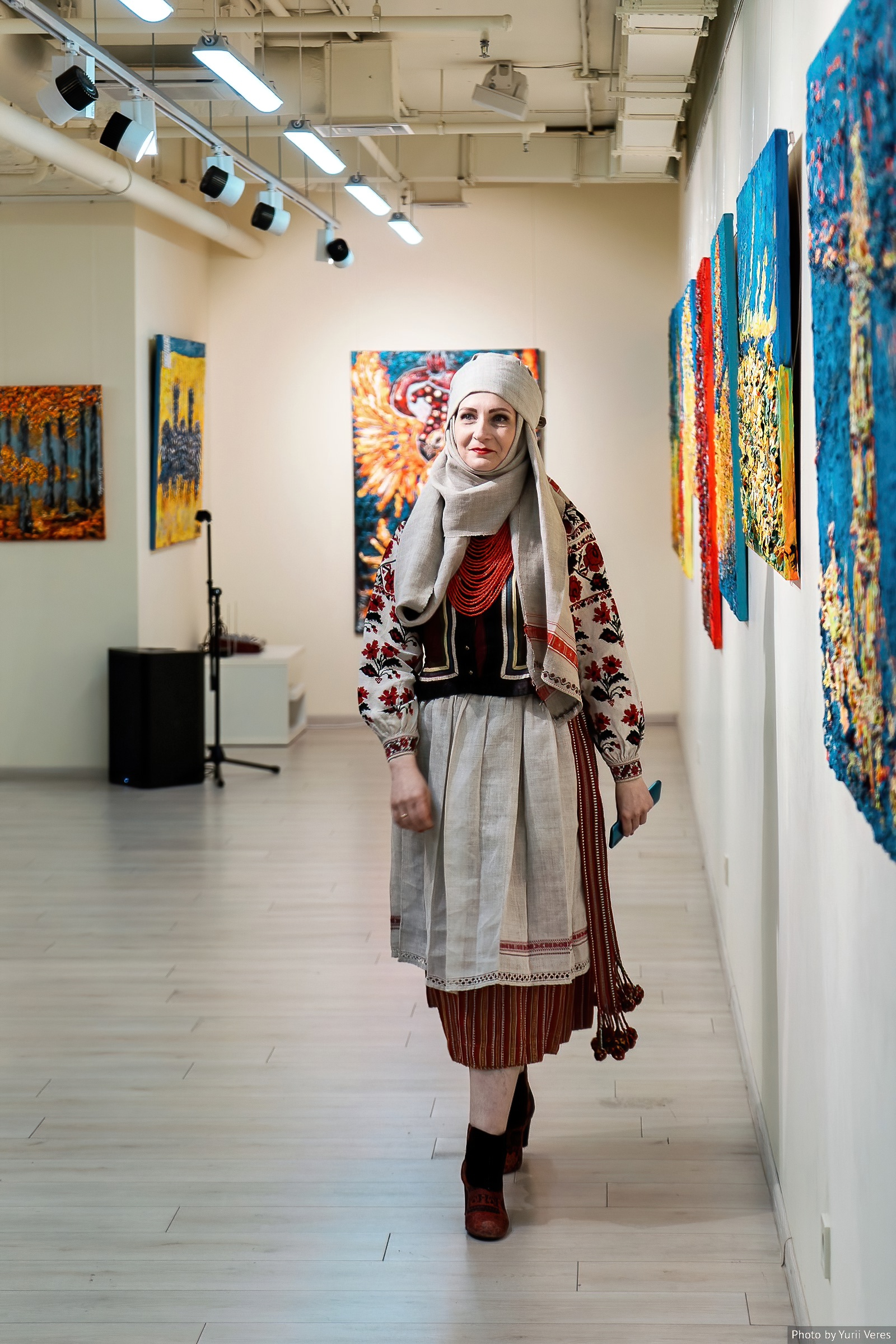
According to Iryna, she became a researcher and popularizer of her regional culture of Rivne Polissya a long time ago, “…from birth. Once upon a time, as a provincial girl from the Polissya hinterland - the village of Sosnove, despite inferiority complexes, stereotypes of “rural” and the contemptuous Soviet “we are not from the forest, we are from Polissya”, she promised herself to destroy these stereotypes-ghosts, to run forward and pull her Polissya by the branch, like by the hand! To talk about it, that it is cool, cosmic and kissed by God!” So the curiosity about Iryna’s personality intrigued me right away. But, we are exploring step by step. First, Who? And then – What?
And “What?” - presented by Iryna at our discretion with a proposal for a collection of successful stories of heritage preservation through the efforts of residents of Ukrainian communities - struck me with goosebumps. Literature, music, and performance directed by Iryna and her team reveal the intangible heritage of Polissya in such a way that you immediately understand everything, you no longer need to Wikipedia, you seem to complete the gestalt of knowledge of an ancient culture that reaches back to pre-Christian times, is firmly intertwined with the common centuries-old histories of Poland, Lithuania, and Ukraine, and finally, organically grows into the present, thanks to Iryna's original poetry, accompanied by music performed by young talented performers in an ethno-rock sound. A kind of signature presentation of high-quality photo/video content, melos (Artem Avrusevich - guitar, Mykhailo Drobina - bass guitar, Dmytro Kirichok - electronic arrangement), live reading of her own poems by the author interspersed with Polissya dialect, laments, and cries, which further encourages us to learn what Polissya is like in color, taste, touch, smell, and sound.
“I have been engaged in a thorough study of the traditions of Rivne Polissya since 2012, including folklore, dialects, and ritual ceremonies. In addition to ethnographic and religious studies, such research achievements were synthesized with my personal creativity, so I created my own cultural product - a folk-literary performance "Ethno-Poems", which I perform in combination with reading texts and folkloric singing of individual lines and words, while dressed in Polissya costume - shirt, litnyk, namitka, krayka, kurtyna, khvartushyk, with the aim of not only popularizing my own creativity, but also national regional clothing," - writes Iryna Rachkovska to us.
For a deeper understanding of what your native land is, Iryna's team, based on their own research and the work of well-known researchers, practitioners, and bearers of living cultural heritage from at least three administrative districts of the Rivne region that are at the highest risk of invasion from Belarus - Vara, Sarny and the northern part of the Rivne districts (coverage - over 30 communities: mainly communities of Sarny, Rokytniv, Volodymyrech, Dubrovych, Berezniv regions), prepared and published the book "#Polissya_as_the_Universe". The book is addressed to Ukrainians: local communities, mature and still quite young culture lovers, educated, but, to tell the truth, little familiar with the cultural heritage of Polissya itself.
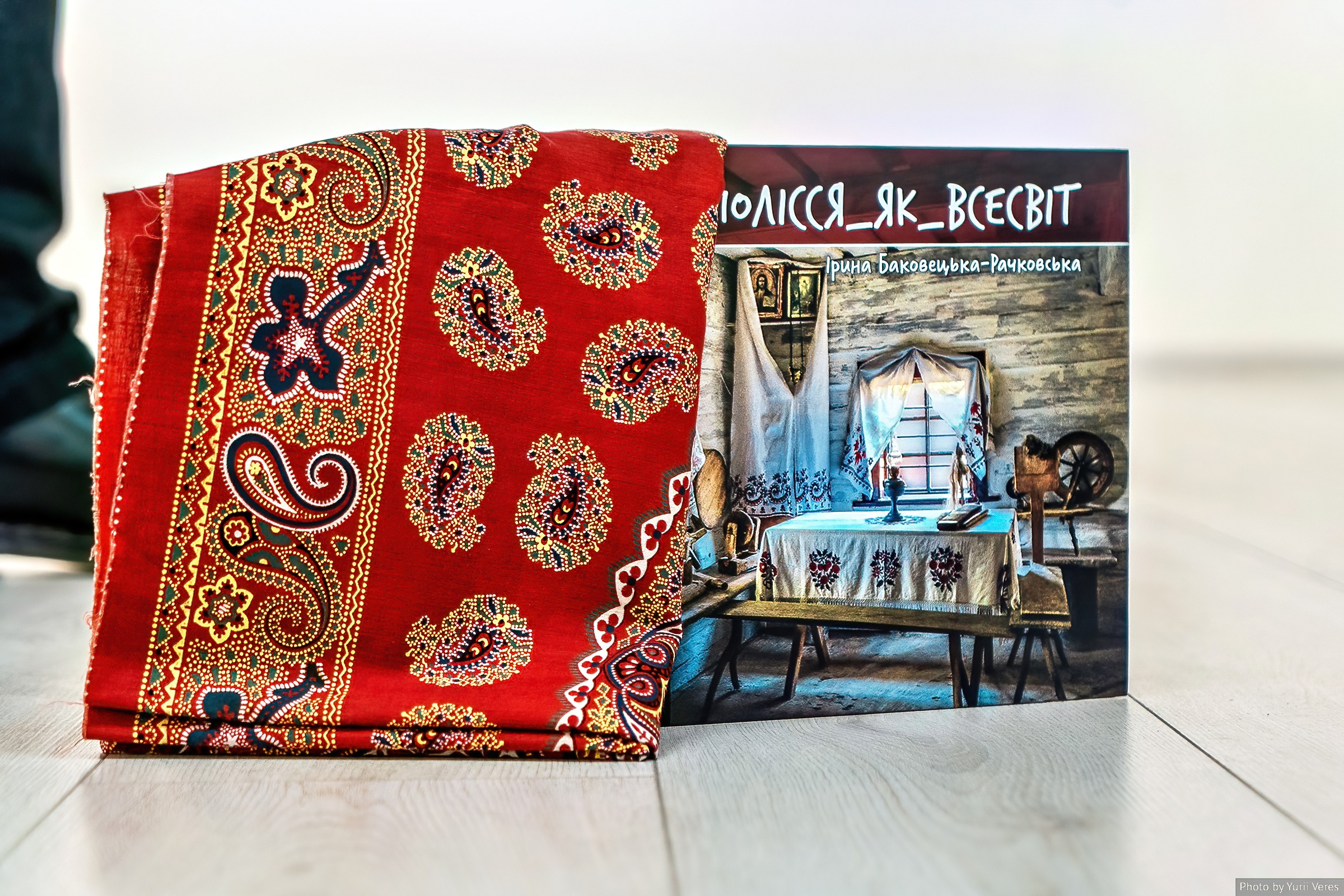
Among the elements of intangible cultural heritage that are presented in the publication in the form of photos with QR codes for full expanded research information about the disappearing "highlights" of the living heritage of Rivne Polissya are the following:
- Driving a bush is a thousand-year-old rite - a tradition of honoring ancestors, symbolizing unity with one's clan and nature. It is carried out exclusively on Green Holidays.
- Bortnystvo - a forest form of beekeeping, a traditional method of extracting honey in specially made log hives, which were hung from forest trees or located in estates.
- Polissya dialect - each Polissya village has its own characteristics, so local residents distinguish a number of dialects - Rokitnyanska, Svaritsevtska, Grabunska, Bilska, etc., by which they recognize where their interlocutor is from.
- Lyudvisarstvo (Dzvonarstvo). In ancient times, the center of bell casting in Rivne Polissya was the town of Stepan. Stepanski bells have been an integral attribute of local temples for centuries.
- Megerka. A four-cornered men's hat decorated with colored cords and tassels or pompoms. It emphasized the social and economic status of a man, was a matter of pride.
- Geometric embroidery. Straight and broken lines, rhombuses, octagonal stars, which were repeated one after another several times. The main colors are red and black.
- Amber products. "Sun stone" has deep sacred symbolism and healing natural properties. Jewelry is made from it, icons, paintings, souvenirs are inlaid.
- Polesie serpanok. Ultra-thin fabric created using a special weaving technique, which consists of established cutting methods, original components of clothing and archaic geometric ornamentation and white-red color scheme.
- Ryadno, kilim. Woven colored bedspreads and a path, mainly from three to seven meters. A feature is the use of specific colors of red, black, gray, green and ocher.
- Matsyk is a raw, dried meat dish prepared by long-term storage of a pig's stomach, tightly filled with meat and seasoned with spices. A traditional dish for the Green Holidays.
- Wedding wax wreath. It was originally made of wax, and later of paraffin. According to an ancient tradition, after the wedding, women decorated the image of the Virgin Mary with it or sewed it into a pillow for themselves and their husbands.
The book was published already during the war, in the summer of 2022, by the publishing house "Samit-Knyga" at the expense of the publishing house itself, the co-founder and director of which is Igor Stepurin - head of the Charitable Foundation "Library Country"; publisher, founder and director of publishing house projects, head of the audit commission of the Ukrainian Association of Publishers and Book Distributors; founder of the Book Club of the Verkhovna Rada of Ukraine. The technical preparation of the book itself took two or three weeks, but the poetry and material that went into the publication took about two years to form.
It is truly inspiring that in recent years – on the eve of the racist invasion and in the midst of the war, during martial law in Ukraine, the Rivne Military-Civil Administration, the Rivne Regional Council, and the communities of the Rivne region are extremely motivated to preserve living heritage, promote every initiative aimed at increasing understanding of the importance of traditional culture in Polesie communities, help monetize local cultures of work, and even heal psychological wounds caused by the war, and much more. Thus, the Rivne Institute of Postgraduate Pedagogical Education conducted the course "Ethno-education" proposed by Iryna with the support of the Ukrainian Cultural Foundation (2020 - 2021), the Rivne Regional Hospital for War Veterans and the State Vocational and Technical Educational Institution "Rivne Center for Vocational and Technical Education of Service and Design" jointly implement career guidance courses "Ethno-education for ATO veterans", and together with psychologists from educational institutions in Rivne - an art therapy course for local residents and IDPs from Eastern Ukraine to the Rivne region "Ethno-education: all together!"
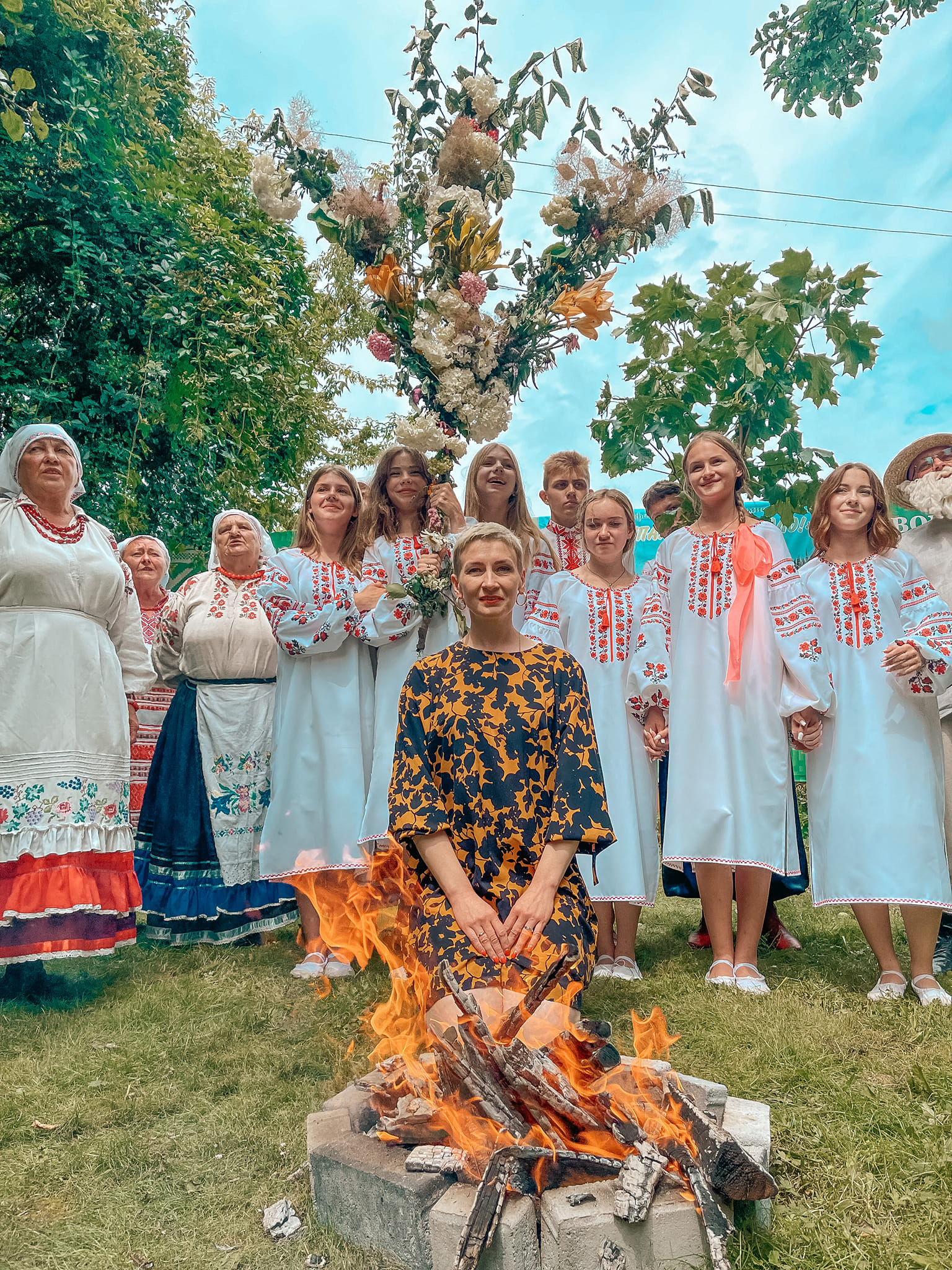
Irina's example is that a talented voice will definitely be heard if it conveys a truly valuable message, sparing no time or effort, simply out of love for its land and people. Then it is easy to find like-minded people and create joint achievements. So far, there is a lot of pain in her poems. But this is the true legacy of today. Just read:
Who goes to church on Easter in black scarves, in gray scarves?! My Virgin Mary-Odigretia, Virgin Mary-deoccupation, You conceived heroes from the spirit of the nation! While Judas was putting up signs, While Iscariots were surrendering positions, The guys from the church were leading the holy souls out of hell. You bake the second Easter cake and bread for the division of the Lamb. Childbirth and separation are not the last torments... Consider that your sons are not in the ground, but in the trenches And will come to you for Easter with their grandchildren!.. Let the apostle John be your son, Let Magdalene be your daughter-in-law; Consider that their summons are the Gospel of the Ruthenians. My Virgin Mary-Odigretia, Virgin Mary-deoccupation, How canonically unbearable it is for you To bake these Easter cakes for the second time during this war And to hear that God has no dead ...
To the ants, isn't it? This is Iryna Rachkovska-Bakovetska, who runs through life and pulls by the branch, as by the hand, her Polissya.
The article was prepared within the framework of the project of the Agency for Private Initiative Development "Promoting Youth Civic Participation in Decentralized Communities" with co-financing from the National Endowment for Democracy (NED).

 26 Dnistrovska St., office 12